

Recognition and seasonal appearance
What to look for in leaves, stems and the wider patch, how appearance changes through the seasons, and which photographs and observations help an identification enquiry.
Educational presentations to help staff recognise invasive plants and understand their ecology and site context.
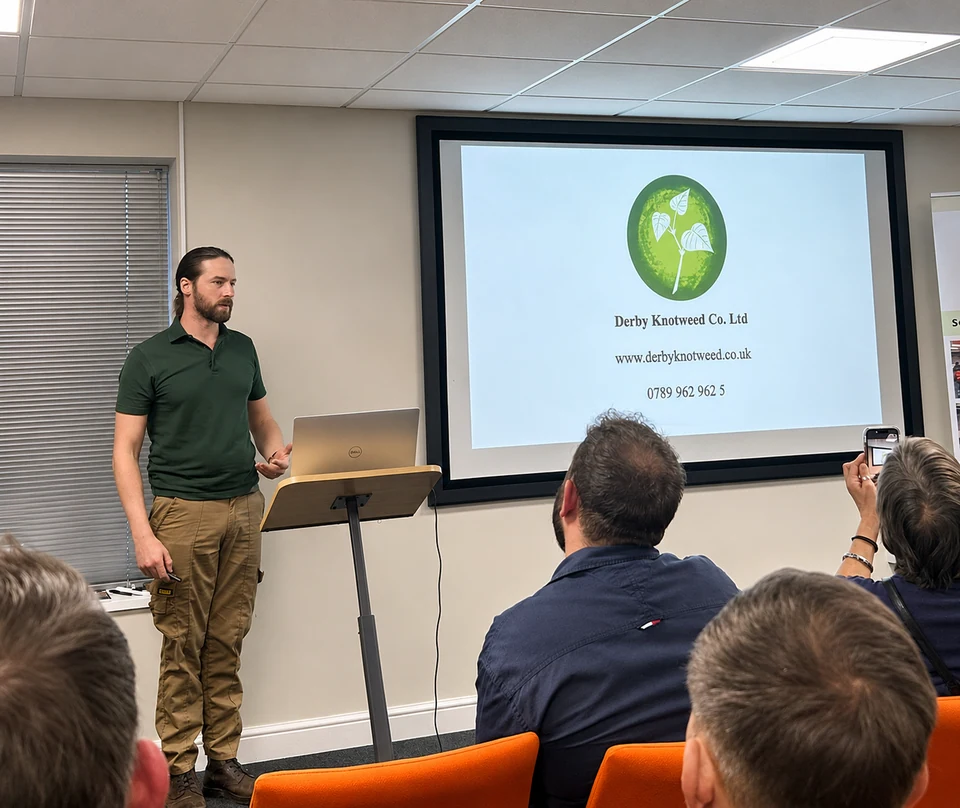
Our presentations help staff recognise invasive-plant concerns, record useful information and know when specialist input is needed. They are for organisations and teams whose work involves property, land or site management.
Tell us about the roles attending and the questions they encounter, so we can discuss relevant topics for your team.
The presentations draw on practical invasive-plant experience and knowledge of horticulture, botany and environmental science. They explain how plants relate to their surroundings and why site context matters.
What to look for in leaves, stems and the wider patch, how appearance changes through the seasons, and which photographs and observations help an identification enquiry.
How roots and rhizomes, disturbed ground and site activity relate to invasive-plant spread, and why observations about boundaries and neighbouring land matter.
How habitats, watercourses, access and the intended use of land influence the questions to ask before planning work.
We help landlords and property developers find practical, cost-effective ways to manage invasive plants. We start by identifying what is growing and where, then discuss options that fit how the property is used, the planned works and the project timetable.
A site inspection or survey can help you decide what needs action, what records you need and whether treatment or a longer-term plan suits the site.
Case studies provide discussion examples for our educational presentations. They help staff consider site evidence, the history of a concern and when specialist advice is needed.
[2018] EWCA Civ 1514
Rhizomes had spread from railway land into neighbouring properties. The Court of Appeal upheld the nuisance claims because the encroachment restricted the use and enjoyment of the land; reduced market value alone was not enough.
Discussion point: record plant locations, boundaries and the effect on how a site can be used.
Read the judgment[2024] UKSC 15
The Supreme Court allowed the council’s appeal. The claimed loss in property value pre-dated the relevant breach of duty, so that breach had not been shown to cause the loss.
Discussion point: build a clear chronology of observations, reports and actions, and distinguish case evidence from assumptions about a loss.
Read the case and judgmentTell us about your staff, their work and the topics you would like the presentation to cover. We will discuss suitable content, arrangements and a quotation.
Ask about an educational presentation